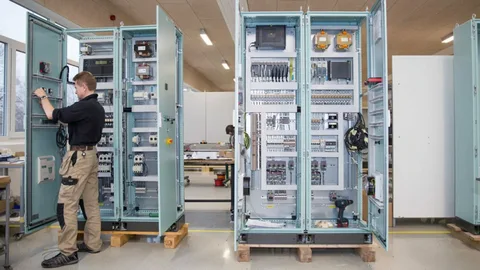
When people think about upgrading their home tech, they picture the fun stuff. A new smart thermostat. Voice-controlled lights. A garage EV charger.
Maybe a backup battery that keeps the Wi-Fi alive during a storm. What most homeowners don’t picture is the gray metal box in the utility closet that decides whether any of it will work.
Your electrical panel sets the ceiling on every tech ambition in the house. And in 2026, that ceiling is getting hit harder than ever.
So which upgrades are pushing residential wiring past its limits, and what should you know before you buy?
EV Chargers Are Changing What a Garage Needs
A Level 2 home charger isn’t a plug-in appliance. It’s a dedicated 240-volt circuit with its own breaker, conduit run, and load calculation. And demand is climbing fast.
The residential EV charger market is projected to grow from $9.68 billion in 2025 to $12.23 billion in 2026, with Level 2 units driving most of that revenue, according to Mordor Intelligence. Longer-term projections from federal researchers suggest tens of millions of home chargers will be needed by 2030 to keep up with EV adoption. That’s a lot of panels being asked to do something they weren’t originally sized for.
Backup Power Is No Longer a Luxury in Texas
Grid reliability keeps making headlines for the wrong reasons. Winter Storm Uri in February 2021 pushed Texas demand to a peak no planner had modeled, and reporting in Forbes noted that more than 4.5 million homes lost power and at least 200 people died. Houston homeowners remember. Many are done waiting for the next one.
A modern home standby generator ties into an automatic transfer switch and runs off natural gas or propane, restoring power in under 30 seconds when the grid drops. Installing one isn’t a weekend project. It means panel work, permitting, gas line coordination, and a load study to figure out what actually stays on when the lights go out.
Smart Home Gear Adds Load You Don’t See
Individually, smart devices sip power. A fully connected home, though, is running dozens of always-on circuits, PoE cameras, mesh nodes, and a heat pump that draws hard on startup. Add a home office, a gaming rig, and induction cooking, and older panels start tripping in ways they never used to.
A few things worth checking before you keep stacking upgrades:
- Panel capacity. Homes built before the mid-1990s often have 100-amp service. A modern tech-heavy household usually wants 200 amps, sometimes more.
- Circuit headroom. EV chargers, heat pumps, and hot tubs each want their own dedicated circuit. Doubling up trips breakers and shortens equipment life.
- AFCI and GFCI protection. Newer code requires arc-fault protection in most living areas. Older homes without it face higher fire risk from aging wiring.
- Surge protection. Whole-home surge devices at the panel protect the expensive electronics behind every outlet, not one strip at a time.
The Boring Step That Makes the Fun Stuff Possible
The pattern repeats across every category. Homeowners buy the visible upgrade, then discover the invisible one it depends on. A licensed electrician is who translates the wish list into a load calculation, a permit, and a panel that can carry the plan. In the Houston area, teams like Electrical Works of Houston handle the panel upgrades, generator installs, EV circuits, and smart home wiring that make the rest of the tech stack behave.
Buy the smart thermostat. Buy the charger. Just budget for the box in the closet first.