
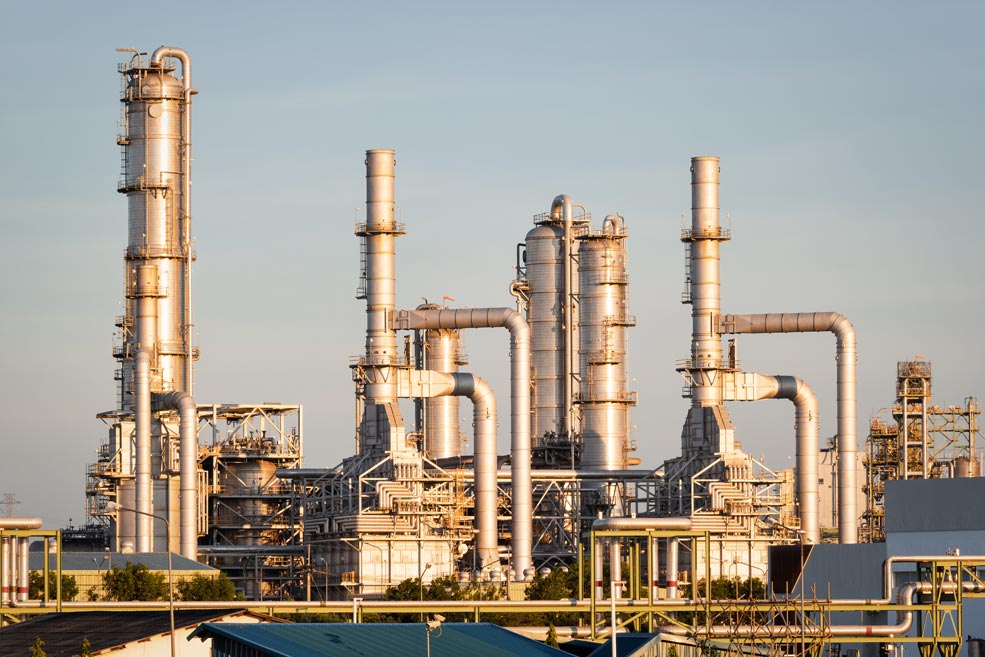
Chemical plants seldom cross the public’s mind, yet they underpin everything from the plastic spoon in your lunch bag to the life-saving pharmaceuticals in a hospital crash cart. Behind the tall stacks and steam plumes is an orchestra of machines designed to feed, heat, mix, separate, and cool raw materials with clock-like precision.
When any part of that orchestra drops a note, production, safety, and profit suffer together. Below are the four core equipment groups that keep a modern plant on tempo.
Boilers – The Heartbeat of Process Heat
Boilers provide the high-pressure steam that drives most chemical reactions. Inside slender water-tube walls, treated feedwater flashes into vapor and races through insulated lines toward reactors, distillation columns, and even on-site power turbines. Operators obsess over flame efficiency, oxygen trim, and blow-down rates because a single percentage point in fuel savings can translate into thousands of dollars per month.
To guard against catastrophic tube failure, maintenance teams run continuous conductivity tests, dose the feed with oxygen scavengers, and schedule ultrasonic thickness checks during every turnaround. Economizers and heat-recovery steam generators further squeeze value from flue gases, proving that the “heartbeat” of a plant can also be its greatest energy-saving ally.
Pumps and Compressors – The Facility’s Circulatory System
Moving vast volumes of fluid is no small feat when those fluids can range from watery brine to syrup-thick polymers or explosive hydrogen. Centrifugal pumps handle bulk transfers, while precision metering pumps dose catalysts at rates measured in milliliters per hour. Positive-displacement pumps tackle high-viscosity duties that would stall a centrifugal impeller.
On the gaseous side, reciprocating or screw compressors elevate feedstocks to reaction pressure or recycle valuable hydrogen through continuous loops. Predictive vibration sensors listen for bearing wear, and mechanical-seal health is tracked by pressure differentials so that leaks are caught before they become fires. Much like arteries and veins, these machines must run smoothly every second or the larger organism grinds to a halt.
Instrumentation and Control – The Plant’s Nervous System
A single operator can steer an entire complex thanks to thousands of sensors feeding data into a distributed control system (DCS). Temperature, pressure, flow, pH, and composition transmitters update several times per second, allowing software to tweak valve positions or agitator speeds long before human reflexes would notice a drift. Safety-instrumented systems run in parallel, ready to shut down fuel lines or vent a reactor if any critical parameter crosses a red line.
Cybersecurity teams now treat control networks like financial systems, adding firewalls and anomaly detection to block malicious code that could spoof a sensor. The payoff for this digital vigilance is fewer unplanned shutdowns, tighter product quality, and faster recovery when the unexpected does occur.
Heat-Transfer and Cooling Assets – Managing Energy and Safety
Chemical reactions rarely stay politely warm; many spit out enough heat to melt their own vessels if left unchecked. Shell-and-tube exchangers capture that surplus, warming incoming feed streams and slashing boiler demand. Compact plate-and-frame units cram huge surface areas into small footprints, perfect for expansion projects jammed inside existing pipe racks. Cooling towers and air-fin coolers discharge leftover heat to the atmosphere, while cryogenic condensers reclaim valuable solvents from vent gases.
For ultra-tight temperature control during polymerization or crystallization, 20-ton chillers circulate refrigerated glycol through double-walled jackets, keeping exotherms on a short leash. Clean water chemistry, corrosion-inhibitor dosing, and periodic tube-bundle pull-outs ensure these quiet heroes stay efficient year after year.
Conclusion
Boilers supply the heat, pumps and compressors move the material, digital brains keep every parameter in range, and cooling systems tame both energy costs and runaway reactions. When those four pillars stand strong, a plant hums along so smoothly that neighbors notice only a comforting plume of white steam.
Let any one pillar weaken, and the resulting cascade can threaten safety, schedules, and reputations. Understanding the purpose and care of this key equipment doesn’t just satisfy curiosity—it illuminates why the quiet reliability of industrial hardware is the true foundation of modern life.

