
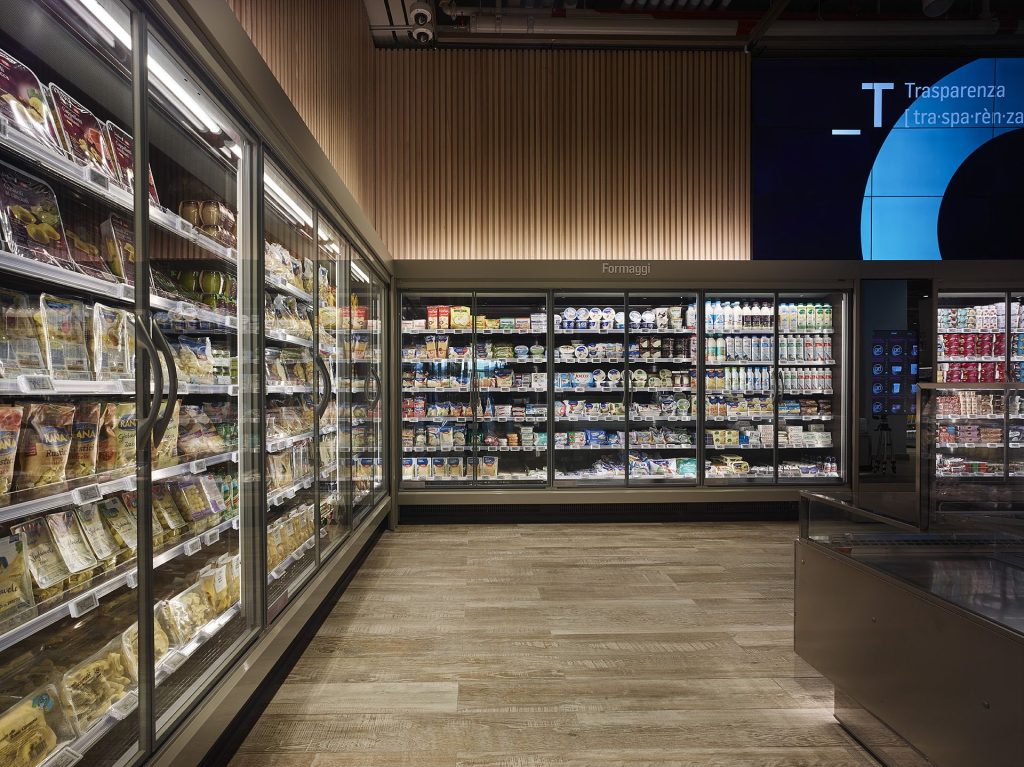
Walk down any supermarket aisle today and you’ll see refrigeration units that look sleeker than the bulky cases of a decade ago. Yet behind those glass doors, an even bigger shift is underway. Engineers and store owners are reinventing how cold air is produced and monitored to slash electricity bills and shrink carbon footprints. Knowing these changes now helps retailers choose equipment that will stay compliant with future sustainability rules.
Energy-Efficient Case Designs
Manufacturers embrace glass doors with low-emissivity coatings, slim LED strips, and high-performance insulation to cut thermal losses while keeping products visible. Variable-speed compressors pair with electronic expansion valves to match cooling output to real-time load.
Heat-reclaim coils capture waste heat and feed it into the store’s hot-water loop, turning liability into free energy. Together these tweaks can trim 25 to 40 percent from yearly refrigeration power use in a mid-size supermarket.
Natural Refrigerants Gain Traction
The global phase-down of hydrofluorocarbons is fast-tracking natural options such as carbon dioxide (CO₂), propane (R-290), and even air or water as secondary fluids. CO₂ transcritical systems, once temperamental in warm climates, now thrive thanks to parallel compression and mist-assisted gas coolers that switch modes before efficiency drops.
Propane micro-distributed cases carry under 150 g of charge, keeping leaks small while letting layouts flex like modular blocks when product plans change.
IoT-Driven Predictive Cooling
Sensors hidden in door gaskets, fan motors, and shelf rails stream temperature, humidity, and vibration data to the cloud. Algorithms spot frost buildup days early, scheduling defrosts during off-peak hours to dodge demand charges. Remote dashboards ping technicians long before a compressor quits, turning emergency repairs into simple tune-ups.
Because these alerts arrive via smartphone, floor managers can act instantly, tweaking set-points or calling service before temperature excursions trigger regulatory violations. Early adopters report spoilage down 15 percent and double-digit cuts in maintenance costs after rolling out predictive analytics.
Compact Components and Modular Systems
Retail floor space is gold, so engineers are shrinking everything from evaporator coils to control boards. Low-profile evaporators tuck above deck height, freeing room for taller shelving without choking airflow. Self-contained pods bundle compressor, condenser, and controls into plug-and-play units that can be swapped overnight instead of during remodels. =
The move toward smaller heat exchangers peaks with the micro channel heat exchanger (MCHE), whose aluminum passages boost surface area, cut refrigerant charge, and pull heat out of the air faster.
Conclusion
Supermarket refrigeration is no longer a static back-of-house utility; it has become a dynamic, data-driven platform that directly shapes energy budgets, shopping experience, and environmental impact. As regulations tighten and consumers gravitate toward eco-conscious brands, the stores that adopt energy-efficient designs, natural refrigerants, predictive maintenance, and compact components today will have a decisive edge tomorrow.
In an industry with razor-thin margins, that edge could make the difference between leading the market and simply keeping the doors cold. In short, tomorrow’s cold cases will think for themselves, sip energy, and fit any floor plan—very good news for grocers and shoppers alike.

