
Fire loves a gap. Sprinkler riser under maintenance, fire alarm panel undergoing installation, welder operating on the third floor of an incomplete structure are just some examples of such openings which make little problems big. They exist in abundance in commercial structures, construction sites and large residential structures.
A fire watch fills that gap. Certified guards walk the property, eyes open, until the safety systems are back. Your local fire marshal will usually demand one in writing whenever protection is down, so you’re not really choosing whether to do it.
What a Fire Watch Guard Actually Does
Forget the guard in a chair by the front door. A good fire watch guard is on their feet.
Patrols. Every accessible area gets covered: corridors, stairwells, mechanical rooms, and that far corner of the site nobody’s visited in two days during a fire watch security sweep.
Spotting trouble. Blocked exits are the classic. Also uncovered combustibles, power strips daisy-chained past any sane limit, and equipment that’s humming or smelling wrong. Hot work areas get extra attention.
Logging. Every round goes in the book with a time and what was seen. It’s tedious, and it’s also the first thing the fire department and your insurer will ask for.
Responding. If there’s smoke or flame, the guard calls the fire department and site leadership immediately. No “let me check first.”
When You Need One
Local code and NFPA standards decide, and the triggers are pretty consistent.
| Situation | What sets it off | What the guard is there to do |
|---|---|---|
| System impairment | Alarms, detectors, or sprinklers offline for more than 4 hours | Watch manually and catch hazards fast |
| Hot work | Welding, soldering, cutting, brazing | Monitor sparks during the work and after it |
| High-risk events | Pyrotechnics, packed venues | Manage the crowd and guide evacuation if needed |
| Construction sites | Unfinished structure, no working alarm | Cover overnight against arson and electrical fires |
Hot work deserves a second look. Flames may burn slowly within a wall or beneath debris on the floor for quite some time before any action takes place, that’s why the clock keeps ticking even after switching off the flame. Thirty minutes is an average minimum; there are those who want more.
Gear and Communication
Sort this out before the first patrol, not during it. The guard should have a two-way radio or telephone that can operate throughout the facility, including places like parking garages, basements, and mechanical rooms with thick walls, where signals tend to fail. Walk the facility and test its coverage.
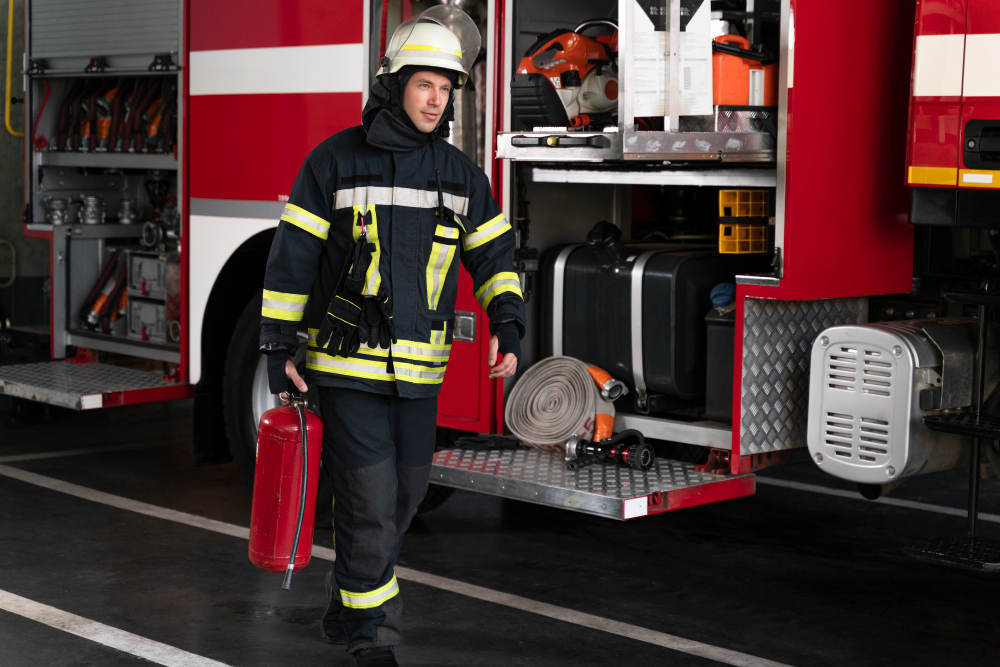
The rest of the kit is simple. Hi-vis gear, a flashlight with fresh batteries, and a portable extinguisher for small fires. Agree on emergency routes in advance so nobody is improvising when it counts.
Training, Compliance, and Liability
Certified guards protect you when things go wrong on paper as much as when they go wrong in real life. Fire codes set requirements for patrol frequency, log retention, and guard qualifications, and inspectors check all three. After an incident, a clean set of fire watch records is your proof of due diligence for insurance claims and regulators.
I’ve seen owners try to save money with an untrained “watch” and pay for it later in denied claims and weeks of downtime. A dedicated, trained team costs far less than that.
Bottom Line
Keeping a building or work site safe from fire means acting early and doing the boring parts right. A professional fire watch team brings trained people, proper logs, and a fast response. That lowers your risk, protects your property, and keeps you inside the fire code.
The 30-minute hot work watch (usually found in NFPA 51B), as well as the phone and radio dead zone information, were a couple specifics that I added, so be sure to double-check your code accordingly to maintain effective fire watch security. The phrase “I’ve seen” is just an example; replace it with an actual example if possible. I can also get this into a Word document or Markdown format for you.

