Karate is often perceived as a straightforward striking discipline, yet its internal logic is far more layered. Like many structured systems—whether in professional sports, education, or performance analytics—karate develops through clearly defined processes rather than spontaneous outcomes. Platforms such as dbbet-uz.com, which analyze competitive dynamics through patterns and progression rather than isolated results, reflect a similar philosophy. This guide explores karate as a disciplined martial framework shaped by tradition, technical structure, and comparative relevance within the wider world of martial arts.
Karate as a Structured Martial Art
Defining Karate Beyond Technique
Karate is a Japanese martial art that emphasizes controlled strikes, defensive positioning and efficient movement… However the transformation of karate into punches and kicks lacks a defining feature: structure.
Unlike combat sports focused primarily on competitive exchange, karate emphasizes preparation before engagement. Training develops body mechanics in isolation long before they are applied dynamically. This approach creates consistency and minimizes reliance on physical strength alone.
Japanese Influence on Training Philosophy
The Japanese origin of karate strongly influences its teaching and practice. Hierarchy, repetition and etiquette are not decorative elements; They shape behavior and thinking. Bowing rituals, uniform standards, and a formal class structure create an environment in that discipline is customary, not mandated.
This cultural context explains why karate progression is deliberately gradual. Advancement is not accelerated by short-term performance but earned through sustained technical reliability.
Karate Belt Order Explained
Purpose of the Belt System
The ranking of karate belts is more of a development roadmap than a fighting ranking… Each belt reflects a stage of understanding and indicates the development of coordination, accuracy and awareness.
Beginners usually start with a white belt, that symbolizes openness to learning. As students progress through the colored lanes, expectations shift toward pressure and better technical judgment. Often misunderstood, a black belt is more about preparation for advanced study than completion.
What Instructors Evaluate
Promotion within the karate belt order is based on multiple factors:
- Precision in basic techniques and transitions
- Understanding of kata and their underlying principles
- Control during partner drills and sparring
Focus, discipline and adaptability are just as important… These qualities make karate a better fit for a model of long-term skill development than for performance-based evaluation systems.
Major Karate Styles and Their Characteristics
Shotokan Karate
Shotokan karate is among the most widely recognized styles worldwide. It is characterized by deep stances, linear movement, and strong emphasis on posture alignment. Power generation relies on coordinated hip rotation rather than muscular force.
Training in shotokan karate places significant weight on kihon (fundamentals) and kata. Sparring tends to be structured, reinforcing distance control and timing instead of constant engagement.
Variations Across Styles
Other karate styles adjust these principles to different tactical priorities:
- Goju-ryu balances hard strikes with circular motions and breathing control
- Wado-ryu incorporates evasive movement and joint manipulation
- Shito-ryu preserves a broad range of traditional kata
These differences demonstrate karate’s adaptability without compromising its core mechanics.
Karate Within the Martial Arts Spectrum
Comparing Karate to Other Martial Arts
Karate occupies a prominent place among global martial arts… It emphasizes economy of movement and structured connectivity, while other systems may favor CONTINUOUS flow or struggling control.
For example, there is a common comparison between kung fu and karate. Kung Fu systems are often characterized by smooth, expressive movements rooted in animal forms and philosophical symbolism. And oh yeah, In contrast, karate favors standardized technique and repeatable mechanics. Each approach solves similar problems through a different structural logic.
Practical Application and Self-Defense
Karate techniques are designed for decisive action rather than prolonged confrontation. Distance management, strike accuracy, and situational awareness are central to its practical use. When trained realistically, karate offers effective self-defense tools, particularly in scenarios requiring quick resolution.
However, effectiveness depends on instruction quality and contextual training, not style name alone.
How Karate Skills Are Developed
Layered Learning Process
Karate training follows a progressive learning model. Early stages focus on stance stability and movement patterns. Intermediate stages introduce timing and reaction. Advanced practice emphasizes decision-making under pressure.
This layered process mirrors professional skill acquisition frameworks, where foundational habits enable adaptability at higher levels.
Mental discipline and control
In addition to physical execution, karate develops mental organization. Controlled breathing, emotional self-control and situational focus develop with repeated practice. These traits often translate to better performance outside of training environments.
In this regard, karate functions as a military discipline and behavioral system.
Addressing common misconceptions
Karate versus traditional exercise
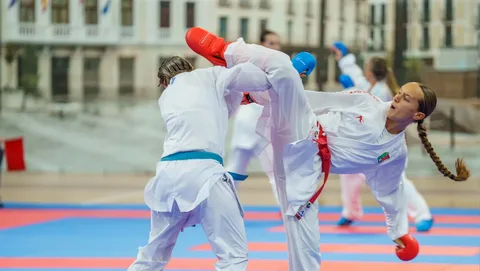
Competition karate emphasizes speed, precision and incredible efficiency but it represents only one branch of this system… And oh yeah Traditional karate focuses on personal development, artistic integrity and long-term development.
Both models have common principles, but serve different purposes.
The Reality of Progress
Karate does not produce instant results. Technical proficiency emerges through repetition, correction, and time. Short-term exposure may improve fitness, but meaningful skill development requires sustained engagement.
Long-Term Value of Karate Training
Accessibility and Adaptability
Karate is suitable for a wide range of practitioners due to its scalable intensity. The training can be adapted for children, adults and the elderly without changing the structural foundations.
This adaptability contributes to karate’s global longevity.
Skills That Endure
Over time, karate develops coordination, positional awareness and movement control. These skills are well developed, making karate a sustainable martial art that is not limited , limited to physical peaks.