
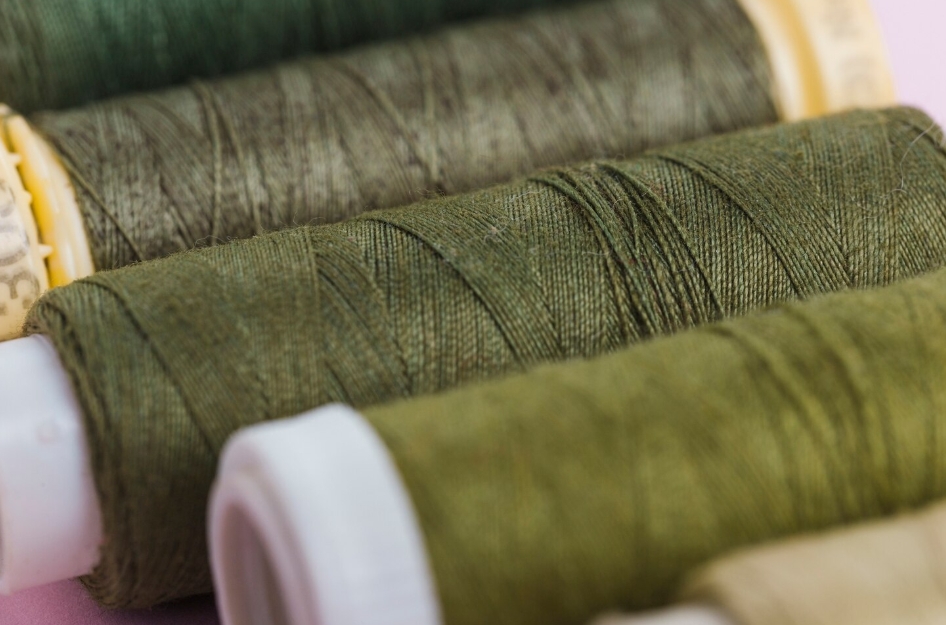
Things break. Hems open. A belt loop pops. A small seam at a pocket starts to pull. Most of these faults are quick fixes if the right tools are close by. When a brand ships smart recycled sewing thread kits and simple how-to guides, a return becomes a quick repair. The product stays in use. The customer feels proud. The store team saves time.
Let’s look at the playbook below.
Why repair kits matter
- Fewer returns. Small seam issues do not need full replacements.
- Better resale. Repairs that match the original look score higher grades.
- Clear warranty. Authorized tools and recipes reduce disputes.
- Customer love. People enjoy fixing something fast and wearing it again.
- Real sustainability. One fix saves freight, repack, and waste.
The thread kit. What to include and why
Thread that matches the garment
- Fiber family match. Polyester garment uses polyester thread (trilobal polyester thread). Nylon uses nylon. Cotton or lyocell uses cotton or lyocell. Matching keeps strength and helps recycling later.
- Two ticket sizes. One fine ticket for most seams. One heavier ticket for tacks and stress points.
- Core colors. Ten to twelve shades cover most lines. Black. White. Charcoal. Navy. Stone. Olive. Sand. Cocoa. A house red and a house blue.
- Finish fit. Low friction for smooth sewing. Anti wick option for outerwear seams so water does not creep along holes.
Needles and small tools
- Needles by fabric. Ball point for knits. Micro or round for wovens and coated fabrics. Leather point only for real leather parts. Include two sizes in each kit.
- Pre wound bobbins where a home machine is used. Same fiber as top thread for even tension.
- Seam ripper. Needle threader. A few safety pins. A small press cloth.
Mini trims that save the day
- Spare zipper pullers. Snaps. Eyelets. A short strip of heat film or seam tape that matches the garment polymer. Keep it small. Enough for one fix.
Clear labels and data
- Color name and code. Ticket size. Needle type. Finish type.
- A simple QR that opens a short tutorial for that product and color.
Tutorials that anyone can follow
Aim for three recipes. Photos first. Short words. No jargon.
- Close a small seam gap. Time 5 to 8 minutes
- Use fine ticket thread.
- Needle. Ball point 75 for knits or micro 80 for wovens.
- Stitch. 301 lockstitch. About 10 to 12 stitches for every inch on fabrics that are knitted. 8 to 10 on wovens.
- Start one centimeter before the gap. Finish one centimeter after. Tiny back tack or bury ends.
- Reinforce a pull point. Time 2 to 3 minutes
- Use heavier ticket thread.
- Make a bar tack across the pull line. Three to four mm wide with 10 to 14 stitches.
- If fabric is delicate, slide a small backing square under, then trim it clean.
- Seal a short tape or film. Timeframe six to ten mins
- Clean the area and ensure it is dry
- Place matching PET or PA or PU film. Match polymer family to garment.
- Press per spec. Then cool clamp 2 to 3 seconds so the bond sets.
Each recipe should have three pictures. Start. Middle. Finish. Add a 60 to 90 second video linked from the QR.
Color matching that avoids pain
Build a color map in your PLM. Each garment color links to one kit shade. Storm grey maps to charcoal. Near black maps to deep black. Put a tiny chip sticker in the kit. The store team does not need to guess.
Store and customer flow that feels easy
- The care label has a simple line. Scan to fix.
- Customer scans and picks home fix, in store fix, or mail in.
- The app shows the recipe and the kit ID.
- If in store, an associate uses the same kit and logs the repair. Warranty stays green because the fix used authorized parts.
Microfactory or service bench tie in
- Keep the same thread palette and two ticket plan across the line.
- A small bench with a single needle, a light press, and a few kits solves most repairs in under fifteen minutes.
- Bigger jobs route to a hub. The same kits feed both places.
Data to track and nothing more
- Repairs per thousand units.
- Minutes per repair.
- Returns avoided.
- Resale uplift on repaired items.
- CO2 saved if you model it.
You do not need personal data. Order or store ID is enough.
Troubleshooting Tabular Representation
| Problem | Possible cause | Fast fix |
| Puckering after restitch | Needle too big or tension high | Drop needle one size. Lower top tension. Lengthen stitch a little |
| Color mismatch shows | Wrong kit shade selected | Update color map. Add chip sticker. Use tone family rule |
| Tape lifts after wash | Wrong film or no cool clamp | Match film to fabric. Add 2 to 3 second cool clamp |
| Bartack cuts the fabric | Tack too dense or cutting point | Widen tack slightly. Switch to ball point. Add small backing |
One week pilot plan
- Choose one high volume style in two colors.
- Pack 50 repair kits with mapped shades and two ticket sizes.
- Train store staff for 30 minutes. Three recipes. Needle pick. Cool clamp habit.
- Offer free fixes for seam issues for one week. Time each job.
- Gather before and after photos and one line of customer feedback.
- List the top two snags and fix them. Often it is color mapping or missing bobbins.
- Scale to three more styles next month.
Tech pack lines you can copy
- Thread. Fiber family match to garment. Fine ticket for runs. Heavy ticket for tacks.
- Needles. Ball point 75 for knits. Micro 80 for wovens. Leather point only on leather parts.
- Stitch. 301 lockstitch. 10 to 12 SPI on knits. 8 to 10 SPI on wovens.
- Film. Same polymer family. Lane width up to 4 millimeters. Cool clamp 2 to 3 seconds.
- Tutorials. Three recipes with photos. QR linked to short video.
- Logging. Scan kit ID after repair. Keep warranty status green.
The message to the customer
This product is repair ready. Your kit uses the same thread we sew with. Fix in minutes at home or in store. Keep your warranty. Keep your gear in play.
Wrap
A good repair culture is simple. The right thread kits. Clear tutorials. A friendly flow. No hunting for tools. No guesswork on color. Measure small things like minutes and avoided returns. Do this and you will cut refunds, lift resale grades, and keep customers happy while your products live longer.

